The Horse is Dead

The 1960s were a breeding ground for psychological operations—whether it was the Cuban Missile Crisis, the assassinations of JFK, RFK, and MLK, the Manson family saga, or the Kent State massacre. These events shaped a generation, but it wasn’t until the 1990s that the architects of mass perception found their perfect formula.

Initially, I set out to catalog the most infamous psyops of the 1990s, highlighting their patterns and implications. But in the end, I’ve succumbed to the sheer futility of it all. As one astute commenter noted, perhaps the better course is to forget—to untangle oneself from these constructed narratives and move forward.

Still, for the sake of posterity, here are some of the most notable psychological operations of the 1990s, ranked in no particular order:

  • The Simpson Trials (1995) – A media circus that turned a double homicide into the ultimate courtroom spectacle, setting the standard for sensationalist legal coverage.
  • Lorena Bobbitt (1993) – A domestic abuse case twisted into tabloid gold, shifting public discourse on gender and violence in ways both grotesque and performative.
  • Y2K (1999) – A manufactured panic that convinced millions the world might end at the stroke of midnight on January 1, 2000.
  • The Gulf War (1990) – A conflict sold with precision-marketed propaganda, complete with staged testimonies and made-for-TV missile footage.
  • Nancy Kerrigan/Tonya Harding (1994) – A bizarre, soap-opera-style scandal that turned figure skating into a battleground of class warfare and villainous narratives.
  • The Waco Siege (1993) – A tragic standoff that played out like a scripted horror, setting the stage for future debates on government overreach.
  • The Oklahoma City Bombing (1995) – A national tragedy that reinforced domestic terrorism as a dominant fear in the American consciousness.
  • The Monica Lewinsky Scandal (1998) – A presidency consumed by sex, scandal, and the relentless 24-hour news cycle.
  • The Columbine Massacre (1999) – A defining moment for media-fueled moral panic, spawning myths and policy shifts that still linger today.
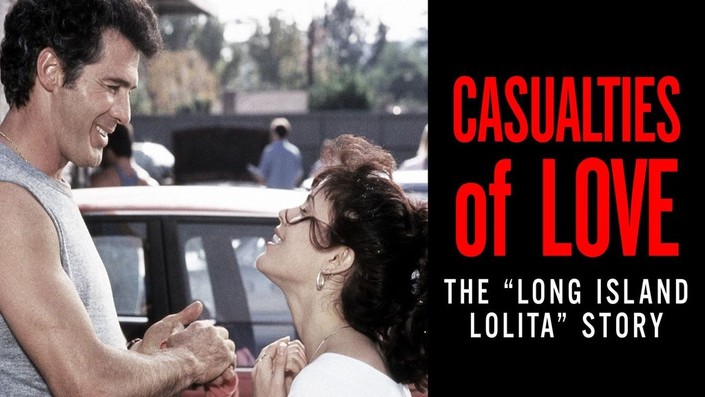
  • Long Island Lolita (1992) – A lurid crime that became a spectacle of tabloid excess, reducing real-life violence to daytime talk-show fodder.
  • Olympic Park Bombing (1996) – A moment of terror at the Atlanta Olympics that ignited debates on security, civil liberties, and the dangers of trial-by-media.

Ultimately, my humble suggestion is this: expunge these events from your mind and experience. They were never meant to inform, only to distract. Even as I list them here, I recognize the irony. But perhaps acknowledging the game is the first step toward moving beyond it.

Now, back to real life.
American Psyop – 90s Edition (The Long Island Lolita Hoax)

I’ve decided to post summaries on what I consider to be the Top 10 hoaxes of the 90s. This absurd and lurid tale came in at #10. The follow-up at #9 will be the Olympic Park Bombing.

In the summer of 1992, Long Island – a land known for big hair and even bigger attitudes – became ground zero for a love triangle so absurd it felt like an R-rated after-school special gone wrong – an intricate mix of media hysteria, suburban drama, and one too many perms.  Enter Amy Fisher, a semi-fictional 17-year-old femme fatale/high schooler whose hobbies included wielding a .25-caliber handgun and teasing middle-aged men – when she wasn’t busy teasing her hair. 

Continue reading “American Psyop – 90s Edition (The Long Island Lolita Hoax)”

Are Headlines in 2025 More Alarmist Than Ever?

Is it just me, or do the headlines in 2025 feel unusually alarmist…and bizarre? I don’t typically spend much time digging into the news, and I avoid watching it on television altogether because of its impact on my mental health. My exposure to mainstream media has mostly been limited to quick glances at MSN tabs featuring lighthearted stories like “5 Sandwiches to Order at Restaurants and 5 to Avoid” or “14 Worst Restaurant Chains We Thought Were the Best.”

However, the tone of the news this year seems to have escalated dramatically—and we’re only a week in. Here’s a snapshot of the concerning and chaotic headlines so far:

Continue reading “Are Headlines in 2025 More Alarmist Than Ever?”

A conversation with AI about 911

AI is programmed to repeat the essential arguments of propaganda surrounding the events of 9/11, and as such is just another Wikipedia, a LOOT, or Lies Of Our Times.

_____________________________________

Me: On 9/11/2001 three jetliners were said to have crashed into the Twin Towers and the Pentagon, and another to have vanished in an old coal mine in Pennsylvania. The latter aside, what we saw on TV, the airliners leaving behind Wiley Coyote-type holes in the building, violates Newton’s Third Law, that every action is met by an equal and opposite reaction, so that the object with the greater mass will prevail, and the aircraft should have been annihilated and left on the streets of Manhattan.

AI: Newton’s Third Law of Motion states that for every action, there is an equal and opposite reaction. This law is universally applicable and is not violated in any physical scenario, including the events of September 11, 2001. The holes formed by the aircraft in the World Trade Center buildings do not violate Newton’s Third Law. When the planes hit the buildings, the planes and the buildings exerted equal and opposite forces on each other. The planes were destroyed due to the high-speed collision, while the buildings, though damaged, did not collapse instantaneously due to their structural integrity and the distribution of the impact force.

Continue reading “A conversation with AI about 911”

Investigating Social Engineering in Music: Alice Cooper

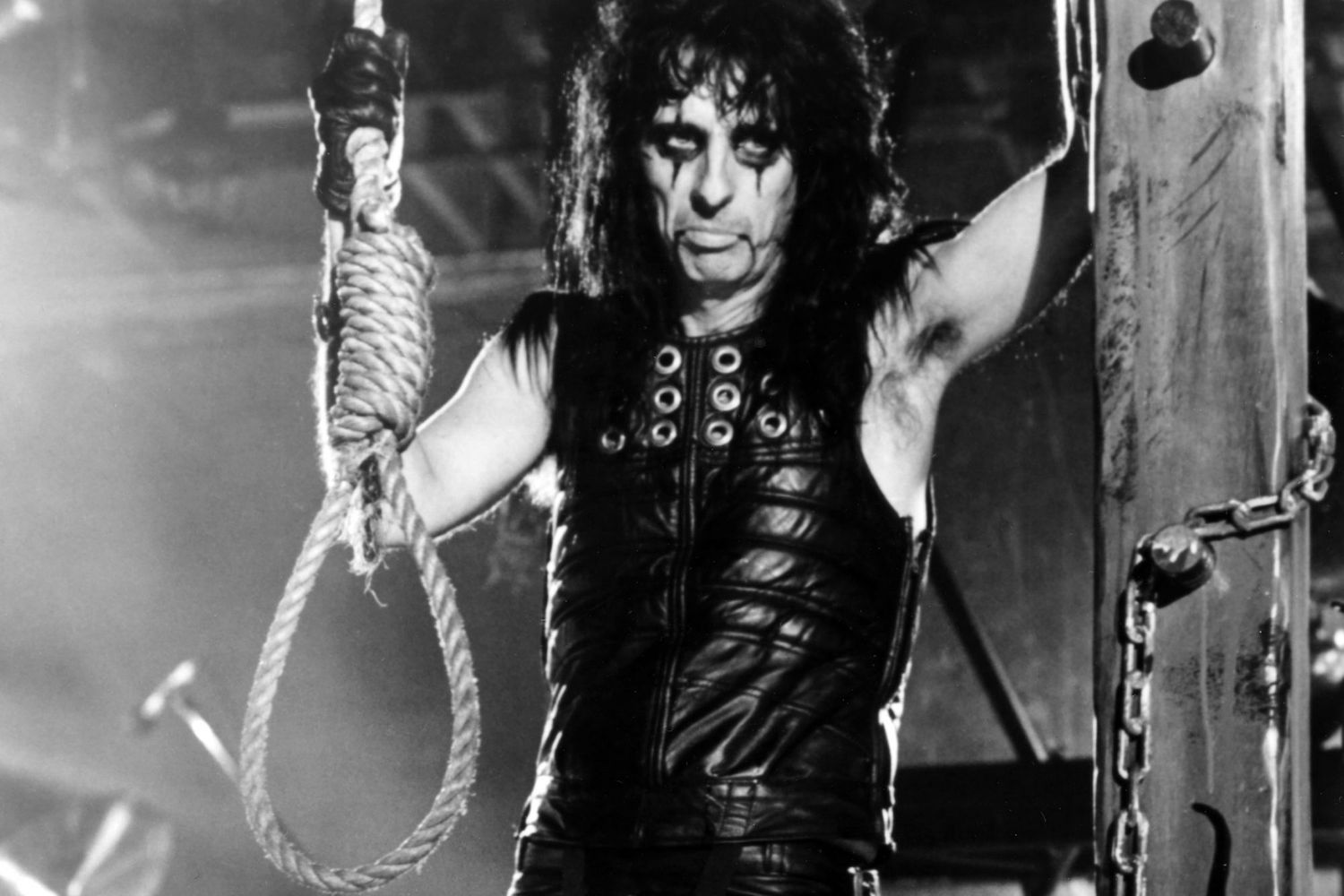
After the dissolution of The Doors in 1971, another band emerged to fill the void of dark, theatrical rock: the Alice Cooper Band. That year, they released two albums, Love It to Death and Killer, both of which showcased impressive musicality. However, their true standout feature was their bold embrace of taboo themes, including manic insanity, necrophilia, and the infamous “Dead Babies.” Such provocative subject matter inevitably drew criticism and sparked debates about artistic intent, with defenders dismissing objections as either prudish overreaction or a failure to appreciate the dark humor and performance art inherent in the work.

Continue reading “Investigating Social Engineering in Music: Alice Cooper”

Manipulative Melodies: Investigating Social Engineering in Music

I’ve been taking a stroll down memory lane with the top-selling albums of the 1970s, a sort of personal farewell tour. But don’t worry, this isn’t one of those “farewell” tours that music acts like The Who or Cher love to milk for decades. No, this is more like revisiting old haunts, savoring the bitter and the sweet, and offering a proper “so long” to the soundtrack of my youth. During the golden years of 1971 to 1980, I went from nine to eighteen—a stretch of time that perfectly bookended my high school era. Naturally, the music of this decade made a massive impression on me. But, like that friend who overstays their welcome, a lot of these songs have been played to death. My old kit bag will carry only a few carefully chosen relics as most of the overexposed hits are being gently but firmly shown the door.

Continue reading “Manipulative Melodies: Investigating Social Engineering in Music”

My “notable death” Dossier (11/21/24)

Source-ery

Reggie Gibson, better known as the rapper Saafir, passed away on November 19. While no official cause of death has been released, it was reported that he had experienced ongoing health challenges since a severe back injury in 1992, sustained during his escape from the hard landing, crash, and subsequent fire of TWA Flight 843.

Details about Saafir’s early life and family are scarce. According to Wikipedia, he reportedly lived with Tupac Shakur during their youth. Given Tupac’s background as an effeminate ballet student at the time, some may speculate about the nature of their relationship, though this remains purely conjecture.

Continue reading “My “notable death” Dossier (11/21/24)”

Hottest day ever?

AP News recently ran a headline claiming, actually shouting, that Monday, July 22, 2024 was the hottest day ever in Earth’s history. My questions are many, but most importantly, do they really expect to be taken seriously when making such claims? This is followed by “Do they believe their own lies?” It appears to me that these screaming headlines are designed to reach gullible people who don’t read beyond headlines and who can’t think properly anyway. That must be the target market – most Americans.

Let’s have a look of some of the many problems with this headline:

Continue reading “Hottest day ever?”

Wikipedia: A Confidence Game

The con man

The term “con man” may bring to mind images of shady, underworld characters, but reality is quite different. A good con artist needs to appear trustworthy and likable in order to win the trust of his victim. Con artists are charismatic, intelligent, have good memories, and know how to manipulate people’s hopes and fears. They attempt to blend in, to look and sound familiar, and often work diligently at appearing to be smooth, professional, and successful. A con man may wear an expensive suit and appear to work in a high class office.[2] Or, conversely, a con artist may put him or herself in a weaker position to play on a victim’s sympathies: They may take on the role of illegal immigrant, a likable man down on his luck, or a woman with a small child who needs to use the bathroom. From city official to roofer, the con artist can appear to be just about anyone.

Two names came to mind as I read the above definition: Bill Clinton and Barack Obama. Oddly, they both belong to a list of US presidents who changed their names prior to taking office. Isn’t that odd? Top of the list is Gerald Ford (Lesley King), followed by Clinton (William Jefferson Blythe III) and Barack Obama (Barry Soetoro).

Continue reading “Wikipedia: A Confidence Game”

An open letter to Dave Worstell of the Billings Gazette

I penned the following letter to Dave Worstell, head honcho of the Billings (MT) Gazette, not intending to send it. After all, it would never get read. Anyway, Worstell is a journalist, and in my life I have never known a more smug group. They presume (without evidence) that they do good work, and so turn inward to their group for validation. They hand out awards to each other like candy to trick-or-treaters. David Crisp, once owner of the Billings [MT] Outpost, a smaller newspaper, once took issue with me on this blog for saying that journalists are smug and do not do good work. He said, and I would quote if it did not take an hour to find it, that the reason they do not respond to criticism is because the criticism is stupid. I answered him … isn’t that a bit smug?

I paid $1.00 for a six month subscription to the Gazette – Billings is my home town and I lived there until 2002 or so. I like to keep up. Honestly, it is not a bad newspaper, lots of coverage of lots of stuff. But the letter below addresses some real issues in their coverage. Read it, see if it agrees with your own experience.

Continue reading “An open letter to Dave Worstell of the Billings Gazette”