Living is easy with eyes closed, misunderstanding all you see ….

As I sleep less than most people, I have time to watch videos as the following one, put up by SK over at RD. I listed some reactions there but won’t repeat them here. At this point there are two people capable of sitting through a three hour presentation, me and SK. So I imagine it stops here, but if indeed you do so, please share your reflections below.

If you merely start and quickly stop when you find something disagreeable, please do not share your reflections below.

In Florence, Italy

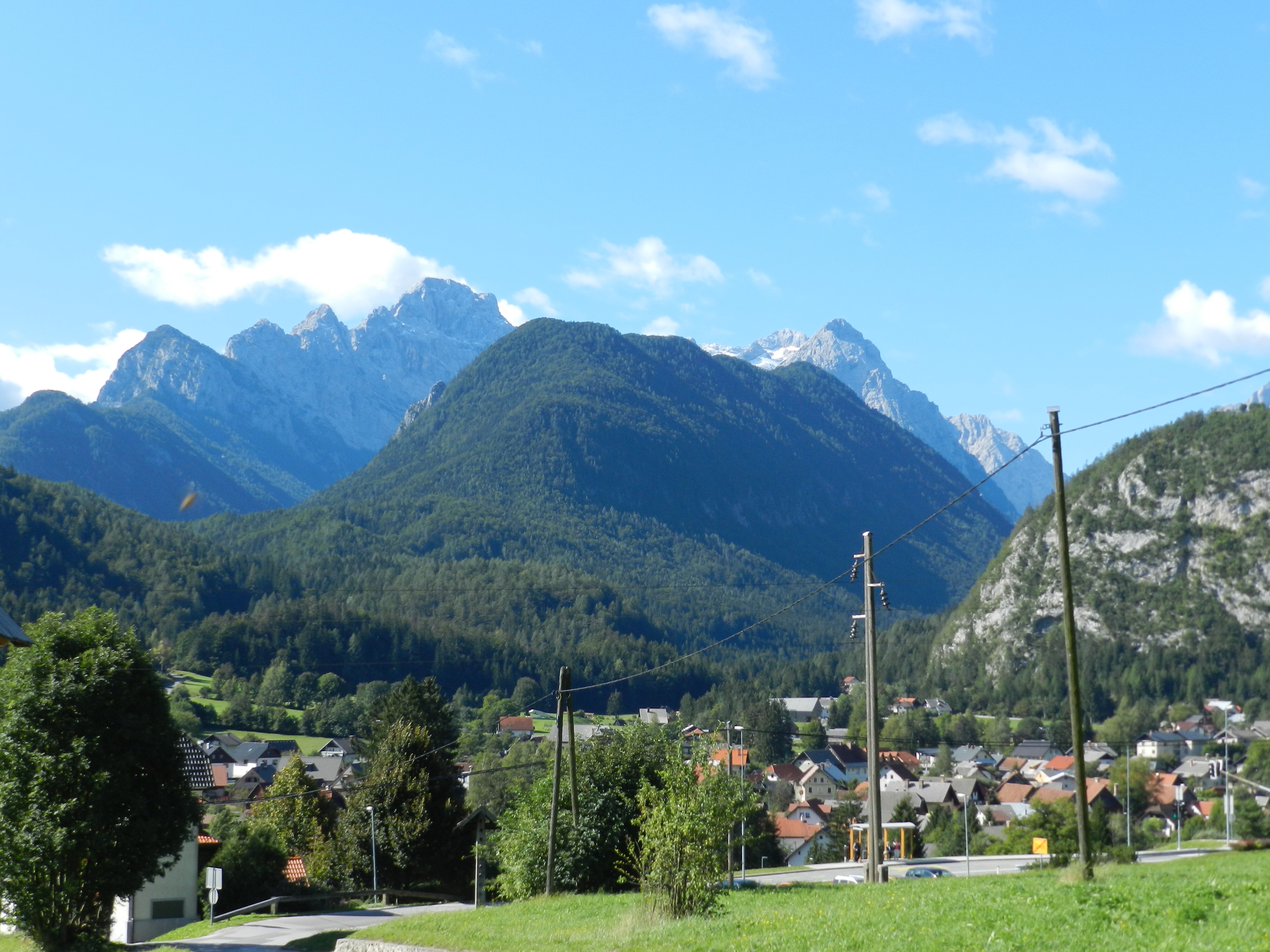
Well, we left Ljubljana and drove through northern Slovenia and Italy in our rented car. It was a spectacular drive. A few photos follow.

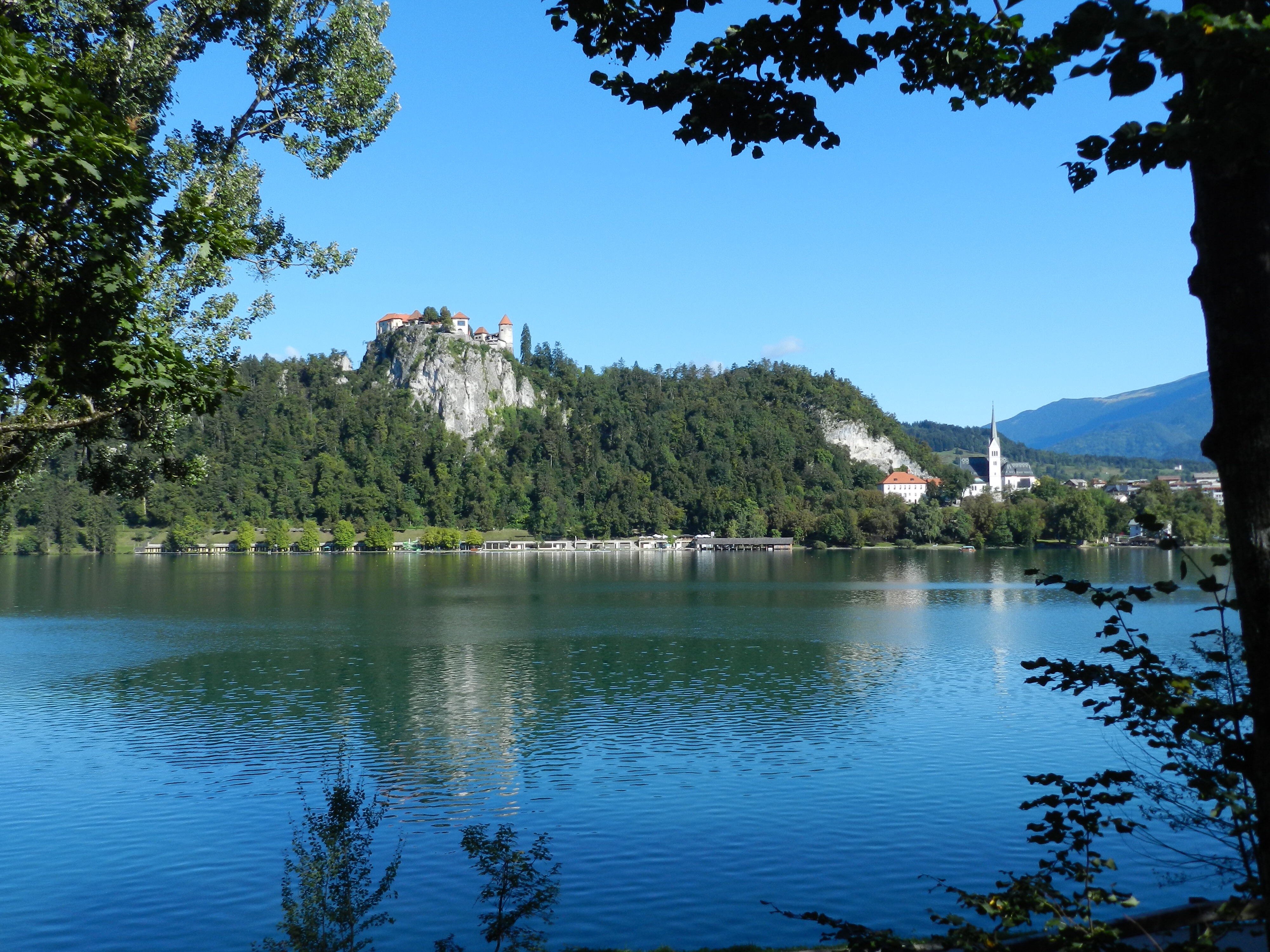
Lake Bled, Slovenia
Lake Bled, Slovenia
Peaks in the Julian Alps, Italy
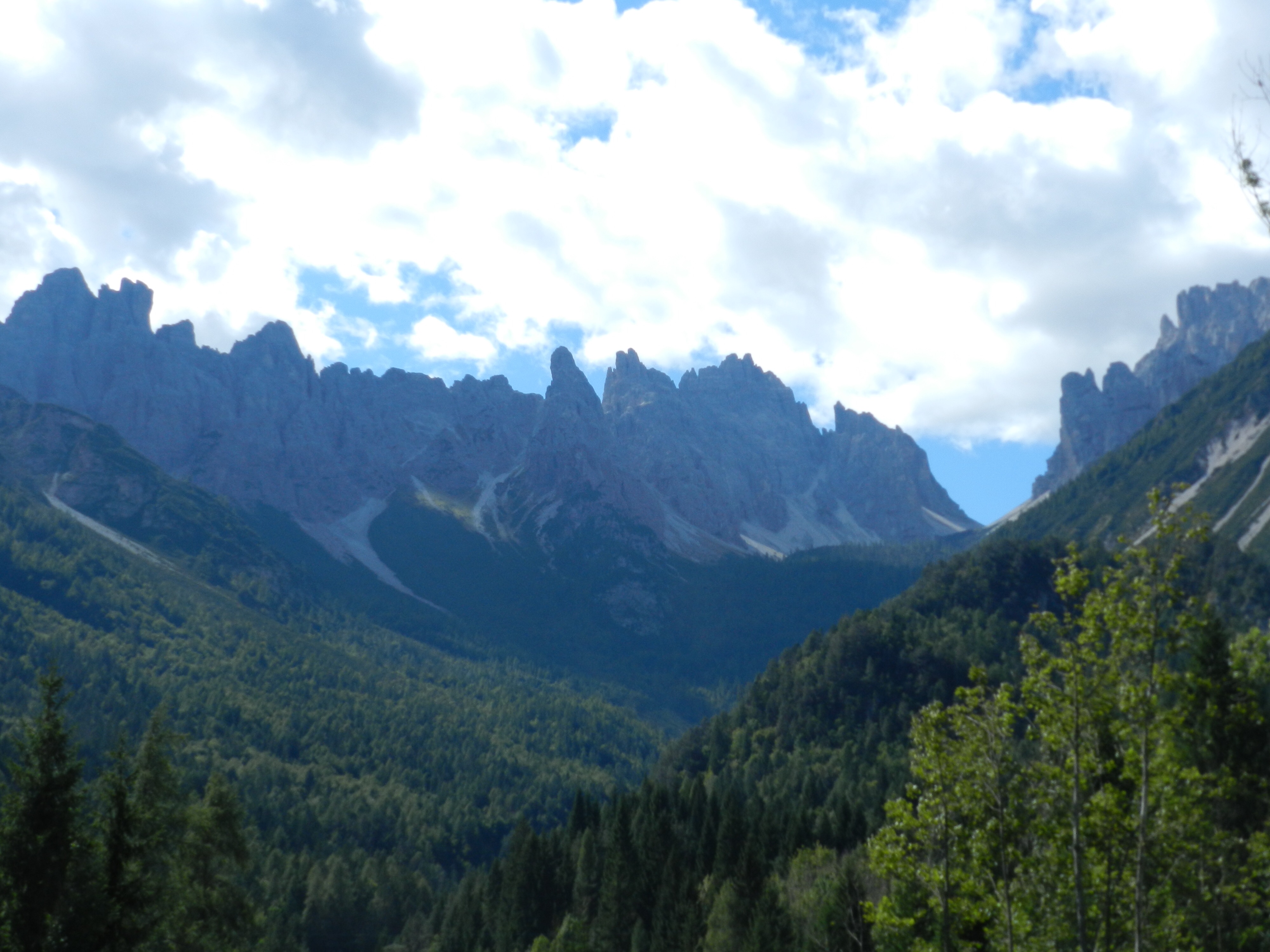
back in the Dolomites, Italy
Back in the Dolomites, Italy

We drove from Ljubljana to Vicenza, a huge mistake – not the drive, but entering an Italian city with a car. They do not mix. There happened to be an annual fair in the city, and parking was hard to find. We ended up parked at the railway station with a warning from the hotel clerk that the car might be towed if left overnight. (There was that to worry about, but with no other parking to be had, we had no choice. It was not towed, and we paid €9.10 to retrieve it the following morning.)

Which reminds me: Mr. CPA here has his numbers backwards – the current exchange rate, dollars to euros is $.89, meaning that euros are worth about $1.10. Oopsie.

And then we drove to Florence. There is no parking to be had in Florence. None for tourists, anyway. Having a car there was foolishness, so we turned it in four days early. That was cheaper than parking in the streets or garages in a place not designed for cars.

Here’s a couple of Florence pictures:

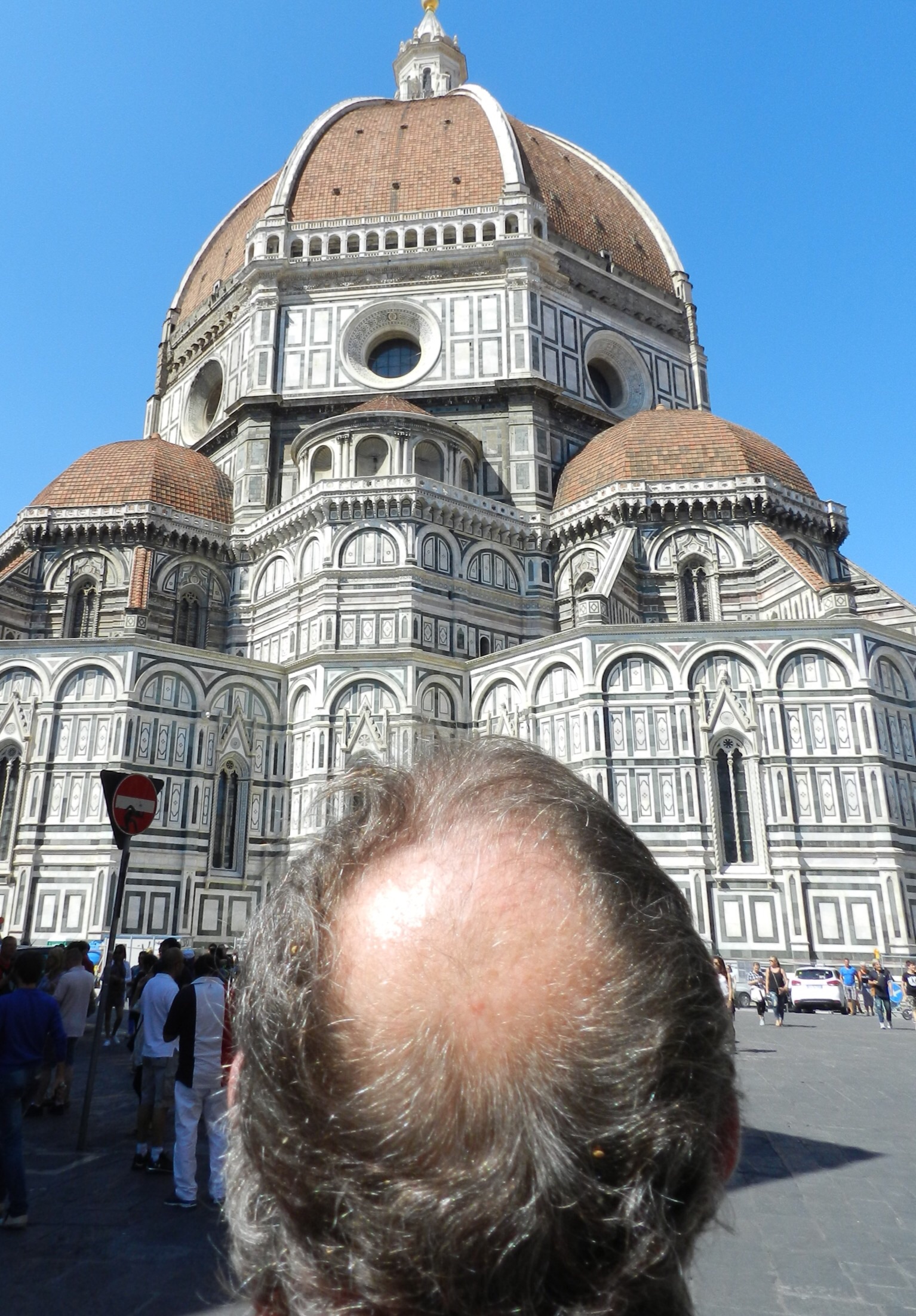
The Duomo
The Duomo

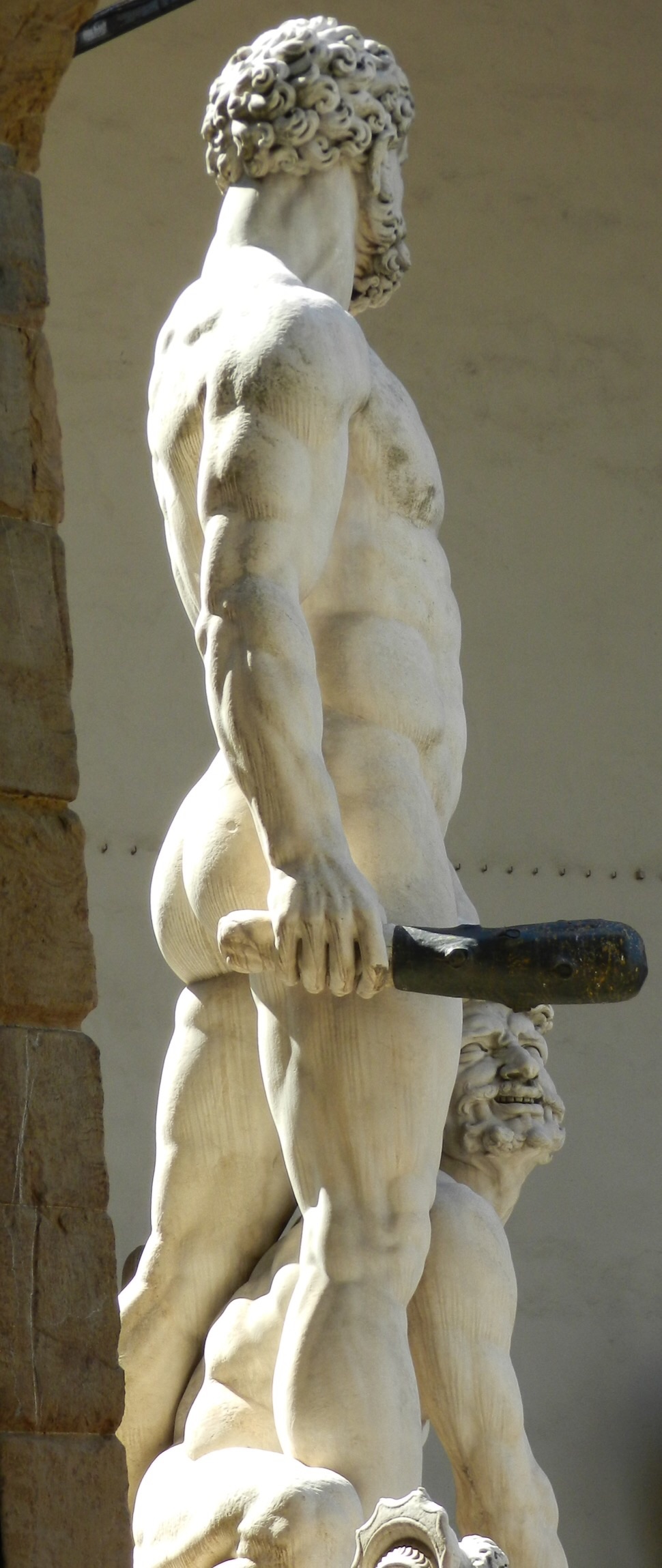
There are naked men all about this city, statues, that is, far outnumbering women. I managed a camera angle on this one to keep it clean or family viewing.

image

Ljubljana on my mind

Among the many ghastly offerings given us by PBS, America’s answer to how to stay uninformed and really, really not know it, is a guy named Rick Steves. He is to travel as Doris Kearns Goodwin is to history, all over it like the Rio Grande – a mile wide and one inch deep. His shows offer a brief glimpse of various places, most often in Europe. It’s all done with aging white people in mind, with excellent tips on how to pack (he sells a line of travel books and luggage).

My favorite scenes are those where he pretends to have walked a long staircase to a monument (more often restaurant), gasping for breath after having done the last five as the camera waits. The end of each show is outtakes, or bloopers. Goodness gracious, the humor.

Anyway, we are in Ljubljana, Slovenia, victims of Rick Steves. We bought it, and even rented a car to drive here.

Slovenia is a pretty place, Ljubljana (pronounced “all right Rick, you got us”) is a moderate large city that has awoken in the last 25 years to cars and western dress. At the center of it is an area where cars are not allowed, and which contains fancy clothing stores, restaurants, one of them damned cathedrals (a small one), and three bridges over Ljubljanica River (designed by a famous local architect – if you want to know more, consult Steves. He’s all over Giolvanni Picco.)

Not to be too hard on Ljubljana, a nice place, a bustling city with a long history and many nice things to see and do. But the concept of our trip here, to see the area at the City Center with its shops and restaurants, was Stevism, silliness, a mistake. It is like deciding to visit Colorado, and instead of spending time in the Rockies, spending your whole trip at the Pearl Street Mall in Boulder.

Today we are heading north, if we can find our way out of here. This is the first time we’ve rented a car while traveling abroad. It is a mixed bag … we have freedom, but not really. We are bound to roadways with thousands of other cars. We waited for long periods yesterday due to line painting crews at work, backing up traffic for miles. I think that is known as “the illusion of progress.” Steven Weinberg, the astrophysicist, mentioned this. He noted that it takes as long now to drive from one side of Manhattan Island to the other as it did in the old days of horse and buggies.

We’ll head up to Lake Bled, another Steves recommendation, and with that in mind, will drive by it without stopping. We are all caught up on modern dress and modes of dining. Ideally, we’ll wander through the less well-known parts of The Julian Alps and Northern Italy, stopping who knows where for the night.

One very favorable thing to report to anyone wanting to travel Europe: Once we got out of Switzerland, it got very affordable. Fifty euros will get you through a whole day, including meals. Lodging is cheap. Yesterday we stopped at a grocery store and bought two bottles of wine, crackers and vegetables, and the bill was nine euros (about $7 $11). The wine is not top-shelf, but for my palate, fine wine is overkill. I cannot distinguish between a Cabernet and a Chevrolet. And frankly, in this part of the world, bad wine is a rarity.

Sorry, no photos to show. Consult Steves.

Hiking the Dolomites

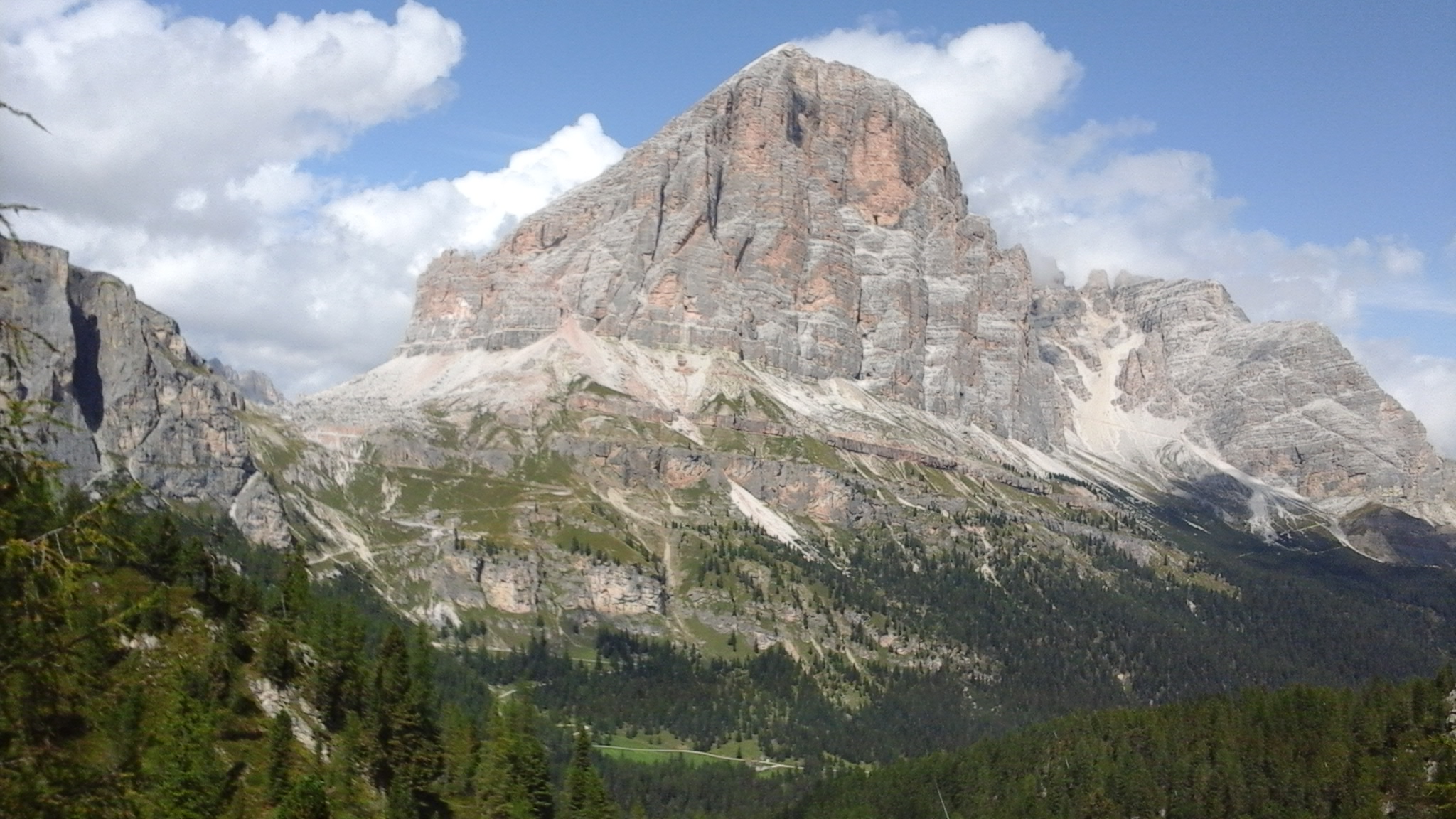
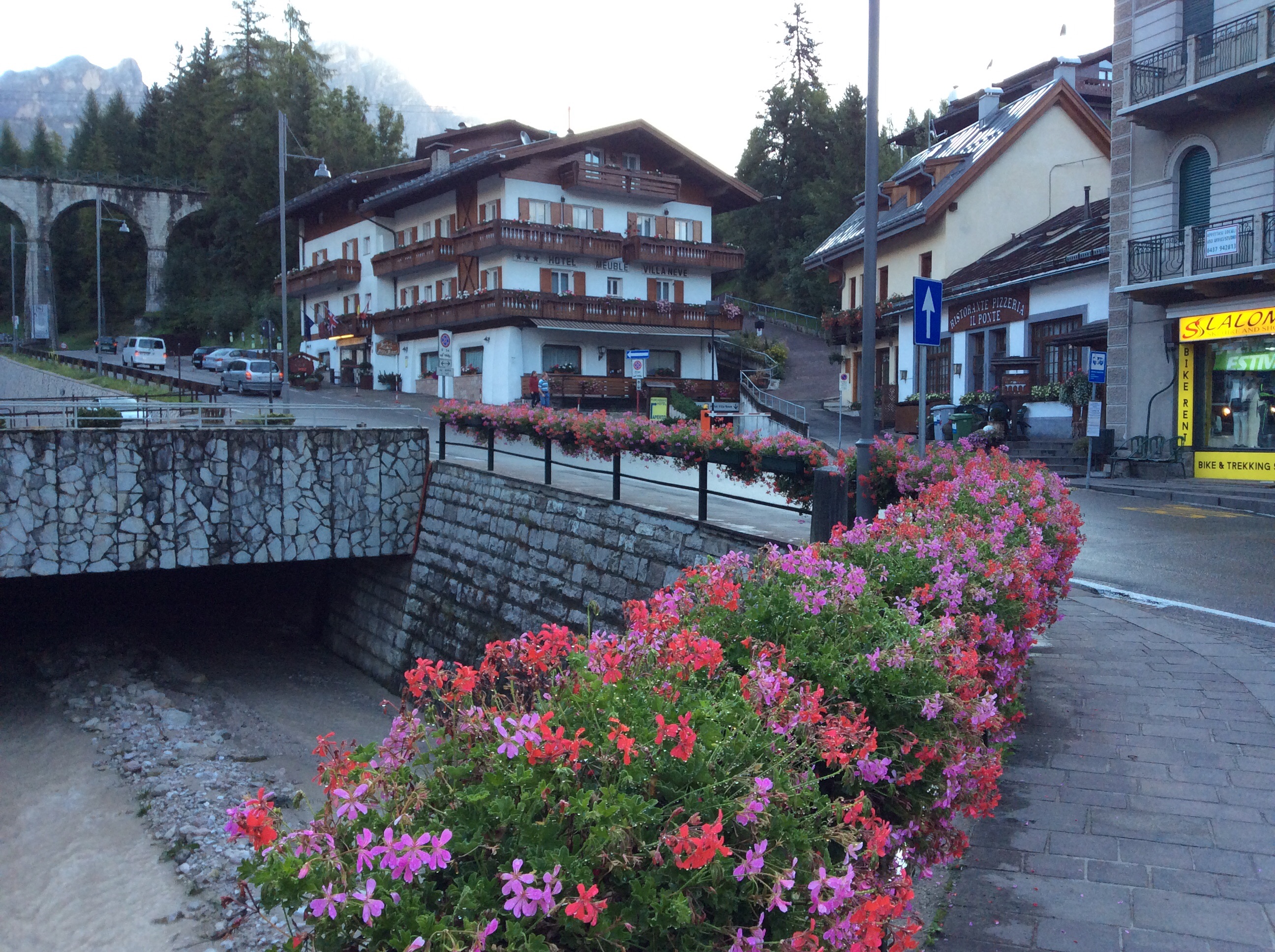
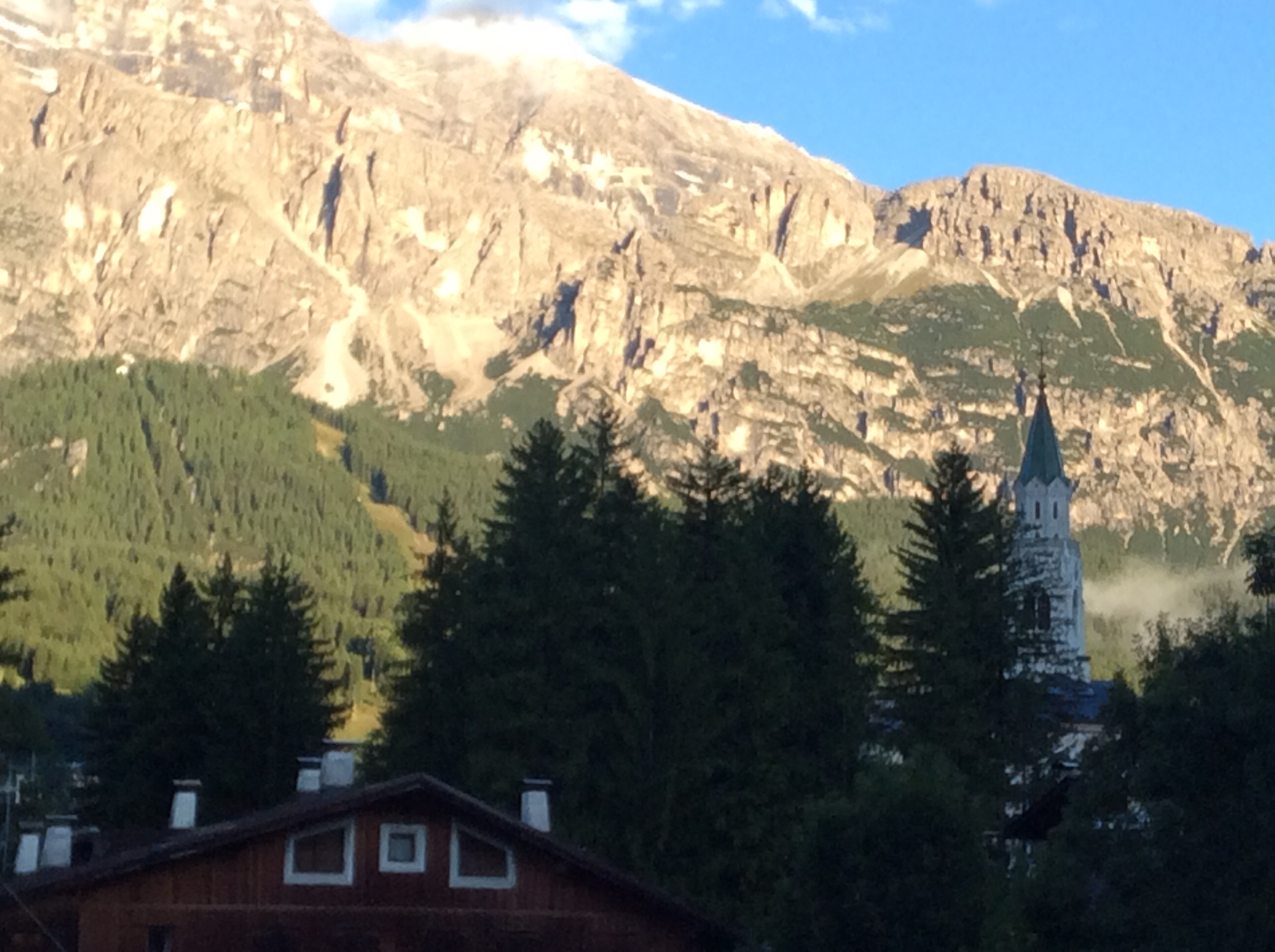
We are hiking across a small portion of the Dolomites, and tonight will be in Cortina again. The hikes are long, many ups and downs, the scenery unforgettable. These are a rock formation of very light material with white peaks and landslides all about. The peaks have a castle-like quality about them, that is, those that are not honed by glaciers. It is all spectacular.

I was thinking yesterday about the distance I’ve come from – as a young guy in his thirties I laid in bed one night and decided I was not only not going to be a Catholic any more, but would not even believe in God. I then did something so simple as to be part of the manifesto of basic human freedoms: I told my kids they were free themselves to believe or not believe, to explore and make up their own minds.

To this day I think it backward and enslaving to demand that kids believe in our God, go to our church, believe as we do. Long before there was a Bible, there was good and evil. The Bible is not a source of goodness as much as a collection of important essays of high literary quality with a smattering of history here and there. Very little of that.

I went through the usual steps after rejecting religion, being angry at what the priests and nuns had done to my young mind, critical of all religion, and highly cynical of the TV preachers and pretentious fools that preach to the rest of us as they live debauched materialistic lives.

And then slowly came around again. I’ll never be a believer as I was brought up to be, but I’ve come to a point where I am not so critical of truly religious people. They may only be hoping, or may be connected to an ethereal communication channel that eludes me. But I remember the words of my brother, a priest, on a camping trip shortly before his death, that there are means of transmitting important truths from generation to generation. Science is one, mythology another. He valued mythology over science. He was not an ignorant or unread man, and knew of the important truths uncovered by science since Galileo.

Anyway, we have a long hike ahead today, mostly a 4,500 foot drop, but it looks gradual. Should be another day lending itself to deep thought. Today I’ll try thinking about football.

A little piece of a large jigsaw puzzle

20150904_141813A little chunk of history here – war before the advent of aircraft was about high ground.

In the early days of World War One Austro-Hungary occupied parts of what is now northern Italy, and perhaps thinking itself overextended, withdrew from Cortina and built fortifications along parts of the Dolomites where valleys might allow Italians to invade in the wake of the withdrawal.

We walked through some of the fortifications today. The loss of life was said to be large, though I’ve not found any numbers (World War One was a slaughter so large that the conflict in the Dolomites might be a footnote).

Notice the high mountain on the right – Il Castelletto. It is the high ground over a valley that looks down over a potential invasion route for Italian forces. All we read in the area say that casualties were devastating on both sides. The mountainside itself was bombed to great effect.

”The Dolomite mountains have become a legend and will be remembered not only for the blood that was shed there, but for the kind of warfare that was engaged: it did not set anonymous armies against each other as it did on the Russian Front – it was a war of man-against-man that valued heroic individual actions.

In addition, the idle moments that soldiers were forced to undergo because of the extreme conditions and severe winters in the high mountains provided time to study the adversary who – during the pauses between one battle and another – sometimes assumed a human face: conversations between “tenemies” – the exchange of cigarettes, letters, Christmas wishes – are now the stuff of legends.” (L. Palla)

[link]

It is quite different to read about such human conflicts, and walk through and see the places they took place. It creates a sense of awe.

Big tent = no substance

James Conner used an expression I have heard often before, “big tent,” which refers to the need to win elections over advancing any ideology. (He uses the opposite, “small tent” to criticize a fellow Democrat.) In theory, it means that politicians have to forge coalitions of people often at odds with one another, the real talent required in that profession, necessitating the art of the well-told lie.

In practice, it opens the floodgates for Republican leadership of both parties. It’s an odd thing to watch, but Democrats are absorbed in partisan sniping based on party name only. The policy pursued by Senator Conrad Burns was vile, the identical policy (with a new name) pursued by Senator Jon Tester is thoughtful, wise, well-considered and only opposed by “purists.”

In the “big tent” there is only one objective, winning elections. Those events are fraught with high emotion, as if life and death were at stake, when in reality either party is bound by financial backers and the corporate-owned media to pursue the same objective, exactly contrary to anything they might have campaigned about.

This system of fake elections goes back in time to the introduction of the mass franchise and use of mass propaganda in the early twentieth century. In theory, everyone’s vote mattered. In reality, voting ceased to matter.

Day seven: Zermatt

image

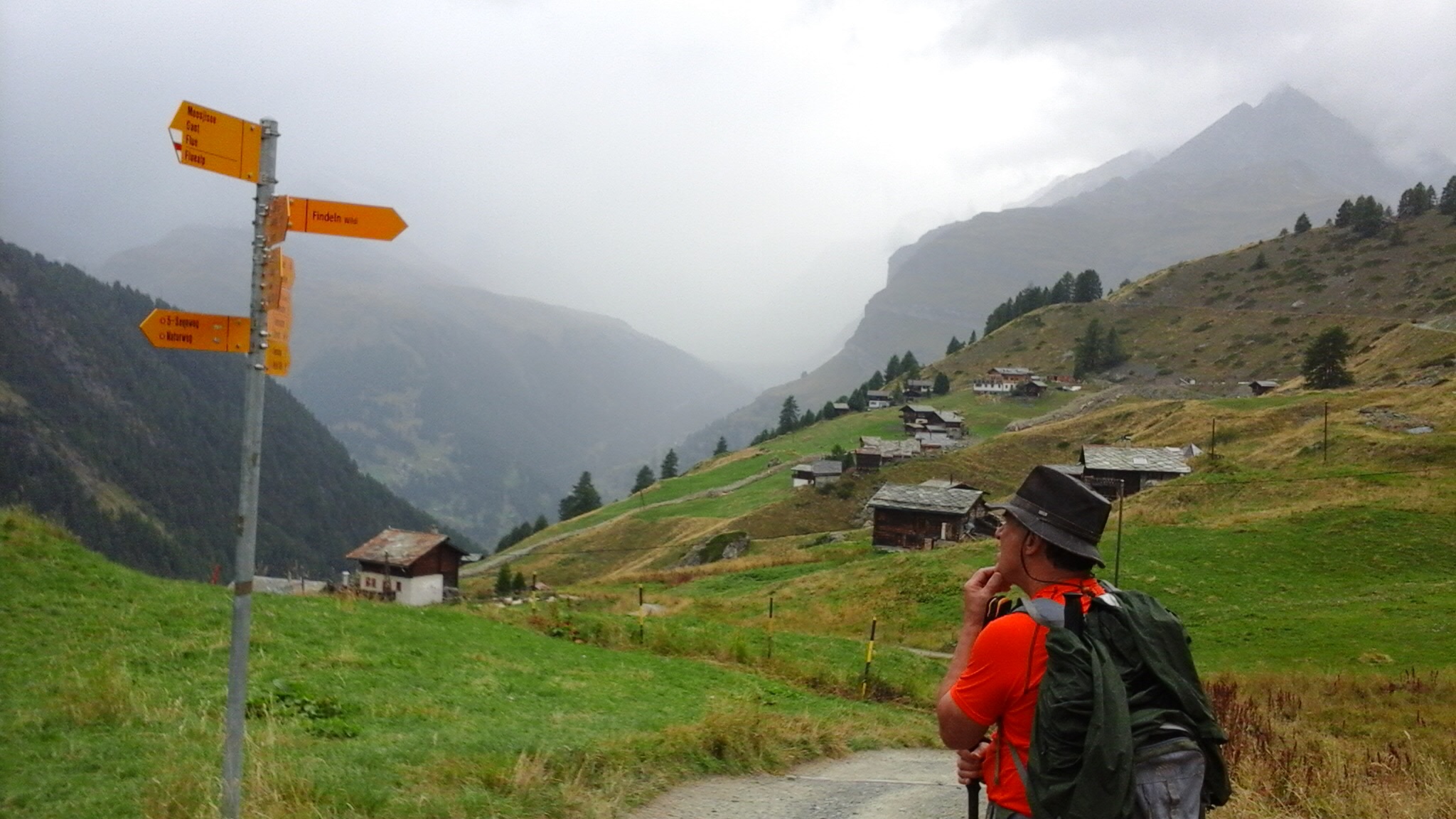
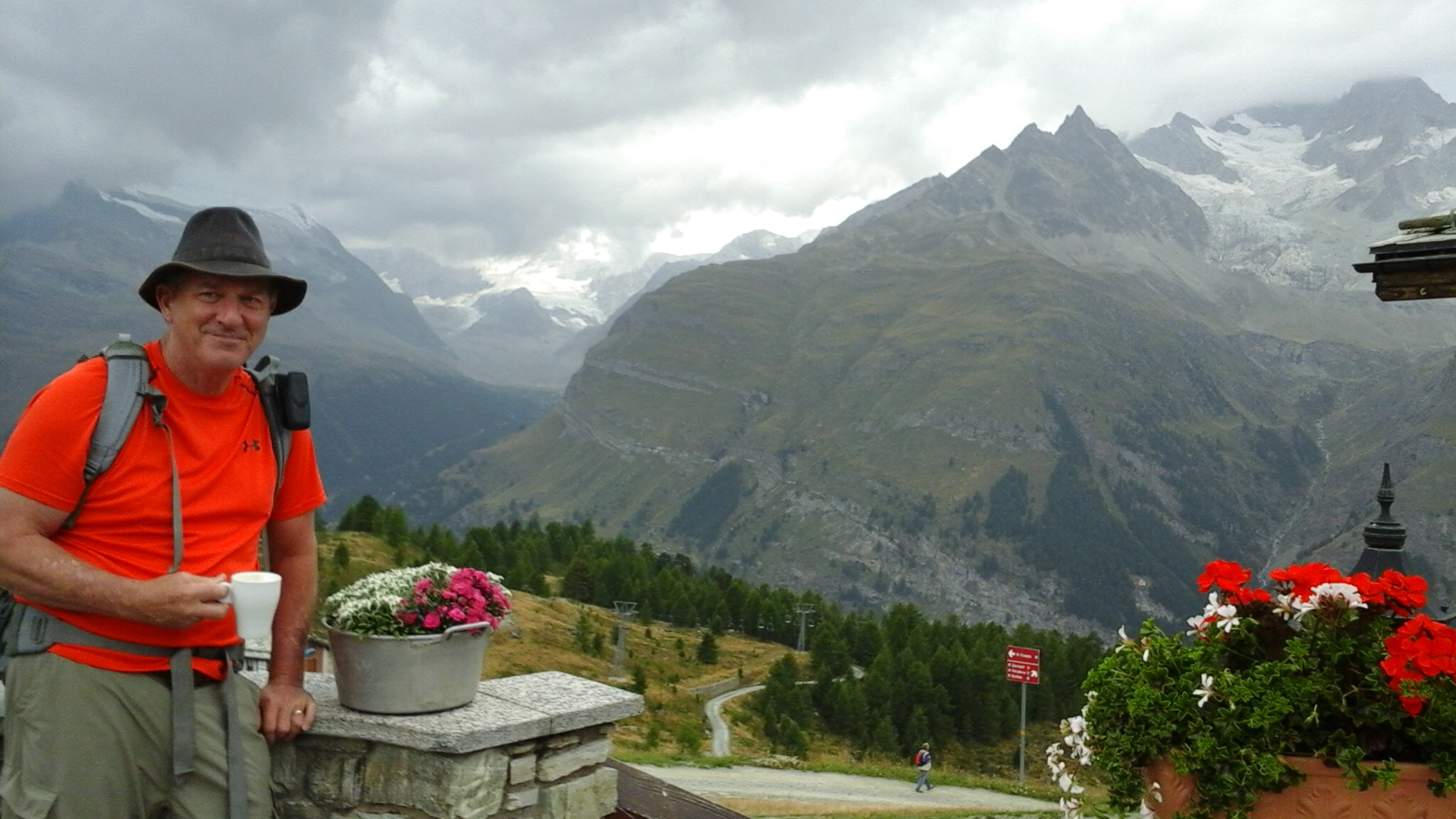
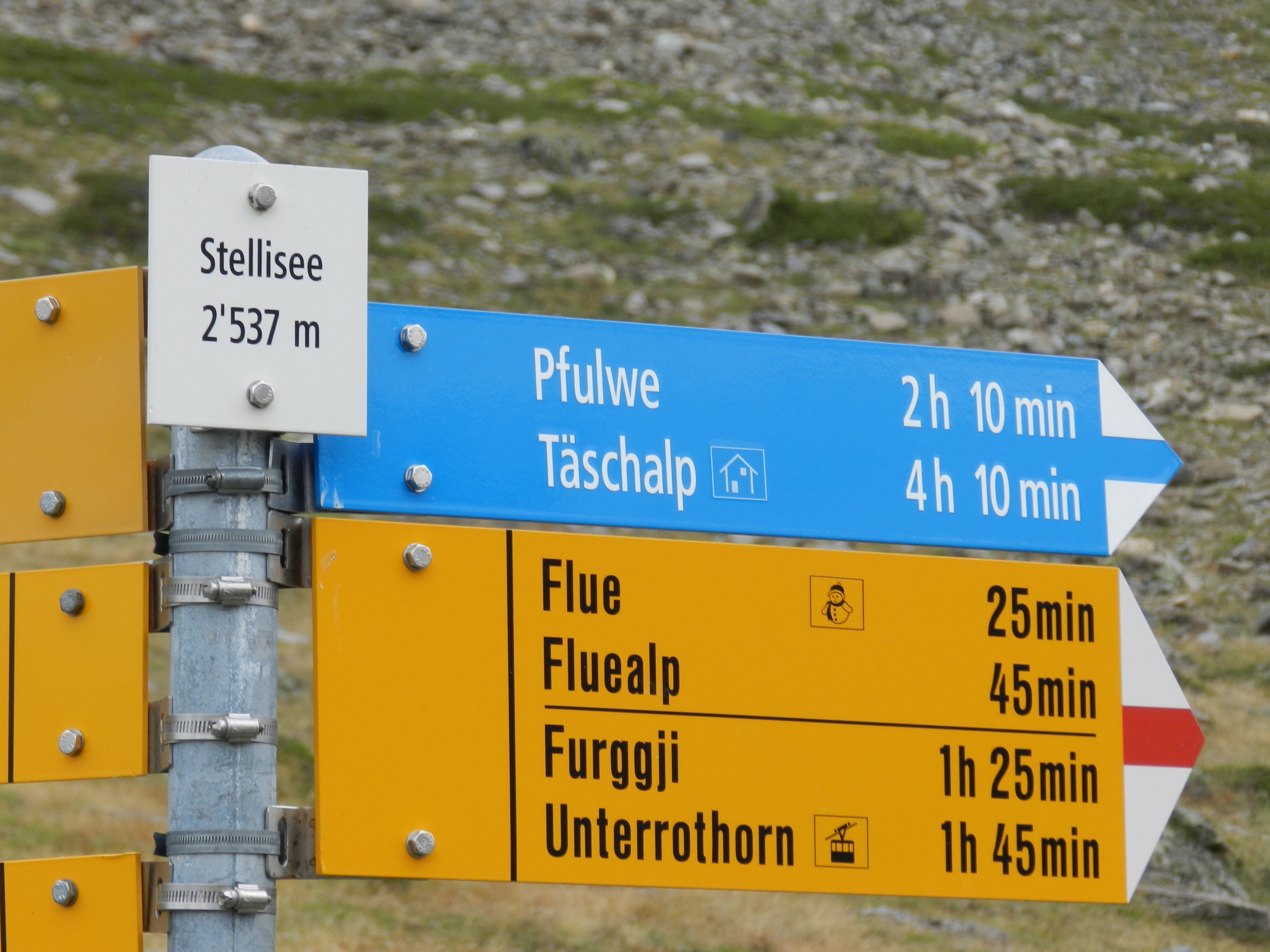
This was our last full day here so we made the most of it. We took a tunnel tram up the mountain, up to about 8,500 feet, and then walked back to Zermatt, a 3,000 foot drop over about eight miles. It was delightful.

Rain set in in early afternoon, but it is warm and we are equipped for that, so it was not a problem.

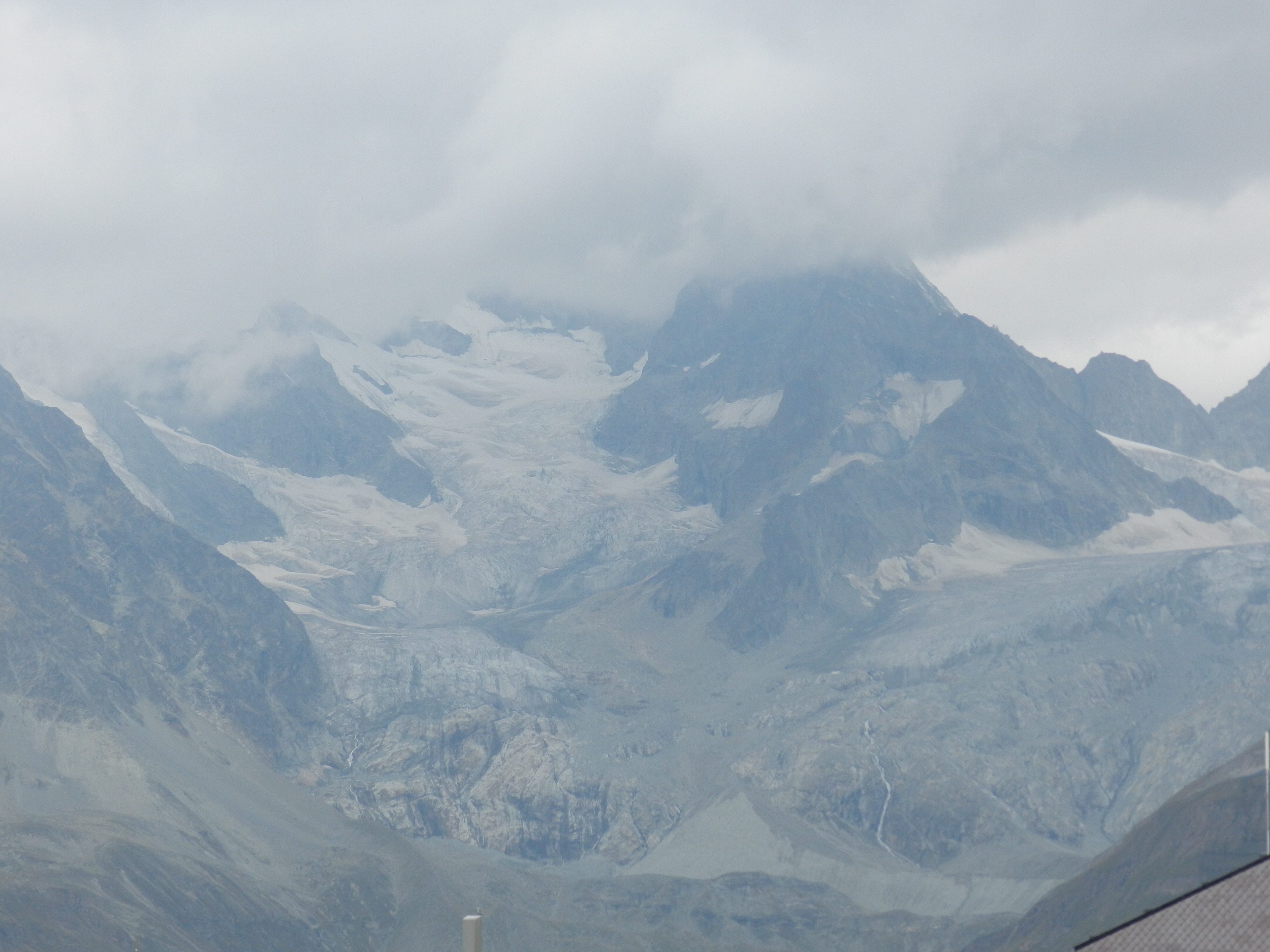
Here are a few photos from yesterday and today:

image

image

image

image

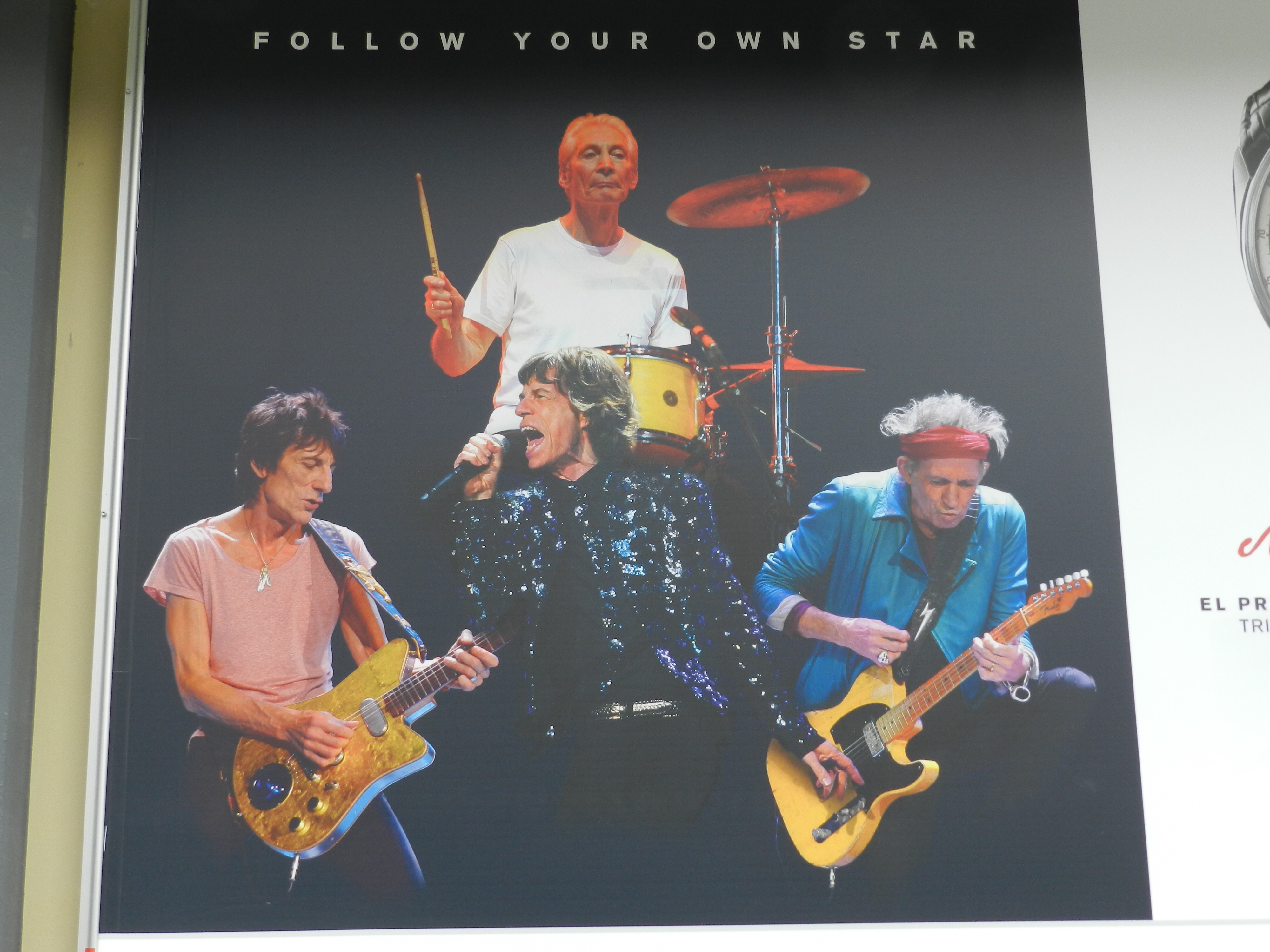
The Stones are as old as the Matterhorn. The poster did not announce any appearances. So must be there for mere inspirational purposes. It was on a display here along with some other performances going on.

Geneva day four

imageThe Geneva portion of our trip has two purposes, to reacquaint with our daughter, and get accustomed to the time change. We have done both, and have a good feeling about it. I now wake up as the sun rises, just like back home, my head full of surprises and ambition.

Yesterday we took a good long time to achieve the day’s goal, a swim in the Rhone. We managed to do other things, like a farmers’ market and long lunch eating food I’ve never eaten before. The menu was a wide variety of different things, like fish and shell food and weird things that grow here and there thrown them together with a spice or two. There was nothing familiar to fall back on so I ordered smoked salmon, uncooked, along with a mixture of salad, shrimp, tomatoes, avocado and other things I do not understand. It tasted good, took a long time to eat, and of course the wine complemented the meal to such a degree that I now better understand the popularity of wine. Club soda works as well, but wine is a complement to all the other favors and a relaxant. Only a small few drink it for its intoxicating powers.
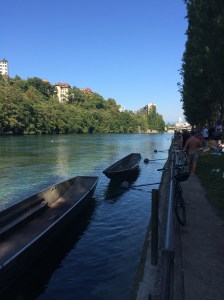
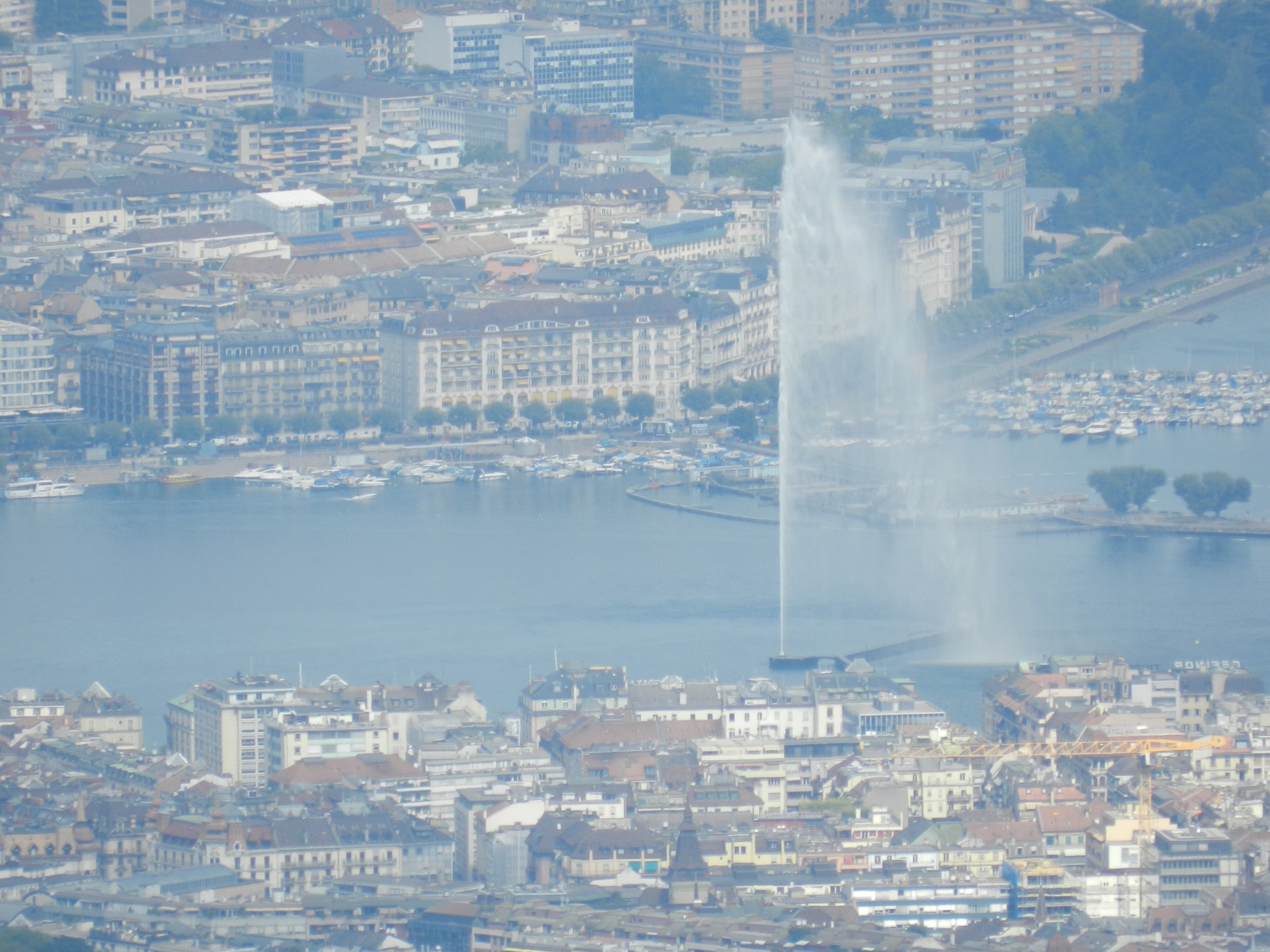
imageThe night before we sat with a view of Jet D’eau, Lake Geneva and Mount Blanc, with a full moon of course, and ate tapas – eight different dishes before us including figs, mangos, tuna, lamb, tofu … the meal was not to satisfy the appetite so much as the palate. American restaurants load you up with one or two things, pizza or beef and french fries, far more calories than we need. The French are more about dining than eating.

We did finally make it to the Rhone yesterday for a swim. I’ll add a photo or two later. It was an affair for the younger crowd, with hot young bodies displayed, swimsuits barely covering torsos, grabbing on to tight young asses and saying “naked” to the legal limit. The girls were pretty too.

I like to say things like that for my son’s benefit, getting all salacious only to disappoint him with latent homosexuality. Then he can cover his eyes and say “Dad! in the manner of Sylvester the cat’s son prior to putting a bag over his head and saying “Oh the shame if it.”

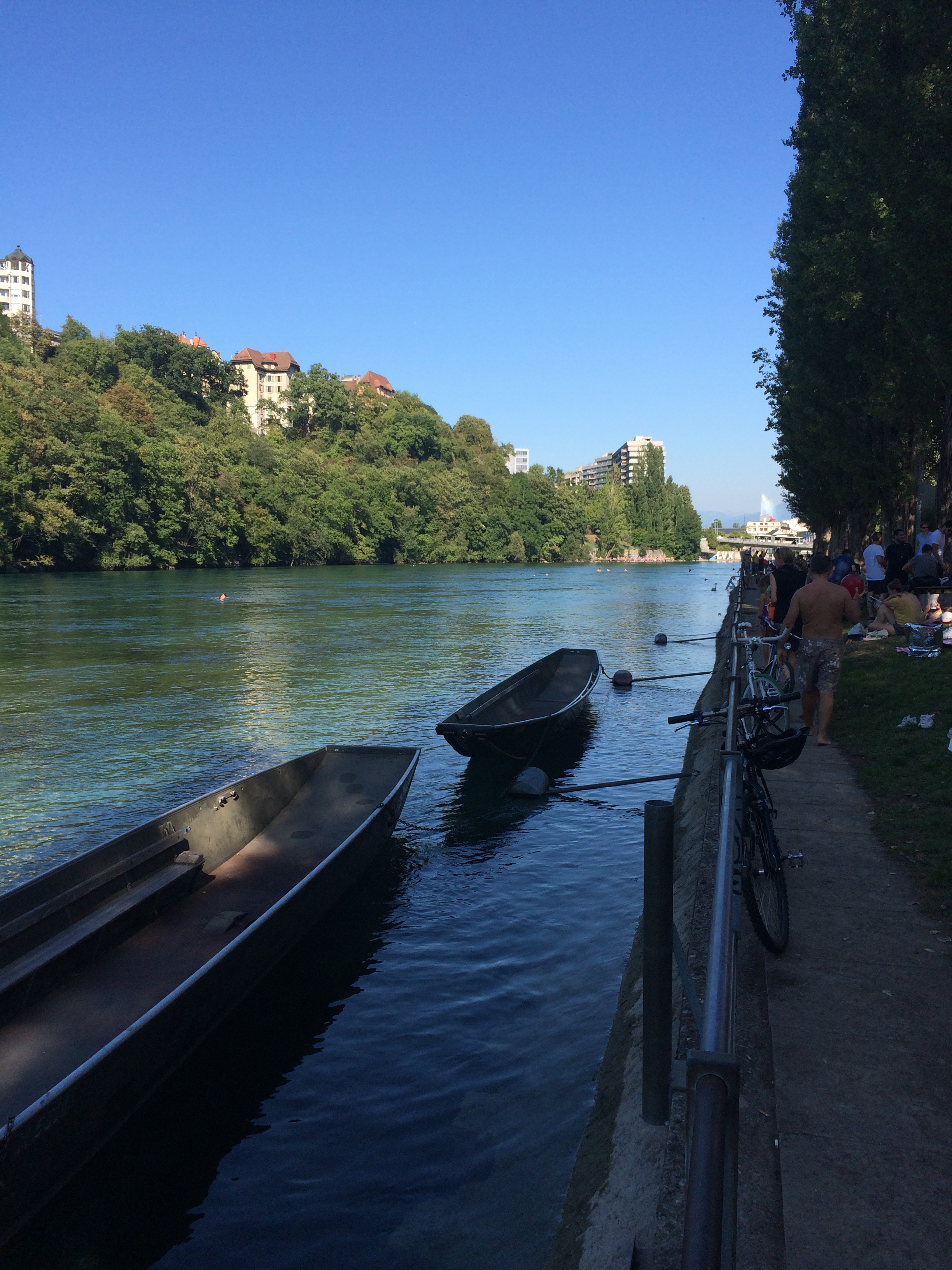
So we got to the place where the Rhone flows out of Lake Geneva, hit the water, icy cold, and quickly adapted and simply floated downstream to a dock where we climbed out, walked back and did it again. It was delightful. The water was clear and clean, the current fast enough to move us along without scaring us.

The average age was probably 22, hundreds of youth, so that our aging bodies were invisible to all but our own kind. There was one woman who was topless. She was everyone’s grandma, so used to being invisible that being topless in public seemed the natural thing to do. “Look away!” I thought.

We met a couple our age, Aussies, and much like us as possible. They are retired and traveling, fit and off to do the complete Mt. Blanc circuit, 100 miles over twelve days. They will be with a group. Both he and I eschew the group travel setting, as the slowest members always rule, but he was given no choice in the matter, and like me, will probably find the experience to be great fun. They are then off to Malta for “a change of pace” before returning to their home, a thirty hour journey by plane, including changes.

One more day here, and then we are off to Zermatt, the Matterhorn (for viewing, not climbing), and points beyond. The photos of yesterday’s event are on my wife’s iPhone. I’ll see if anything is worth reproducing later. I tried to avoid those tight young asses, and the young girls too, and capture the whole scene. We’ll see how it turned out.

Analysis of moral cowardice

I wish to throw down a gauntlet here. I write on this blog for my own benefit, but know that others read it, and also that some of the things I write about nag at the underpinnings of serenity. For instance, only a fool believes the official stories of 9/11 or Boston or JFK, but fools cling to these stories for dear life (even undoing Newton in the process). Why?

William James, a man of clarity, offered up some ideas in this regard. I’ll use him to my advantage.

What I offer here are moral choices. But just as a Shakesperaian tragedy starts out as a small matter, so too do the choices I offer demand a showing of intelligence and character once it is seen that they are not small matters. Not many people are up to it.

James boiled it down to options, 1) living or dead, 2) forced or avoidable, 3) and momentous or trivial.

  1. If I say to you that you should be a Republican or Democrat, it’s a dead issue. Either choice offers the same rewards, primarily group support. But if I say to you that evidence does not support the official story of 9/11, it is live and active and forces you to make a decision that will affect your comfort, acceptance in your group, and faith in your intellectual capacity. No matter your decision, it affects your being.image
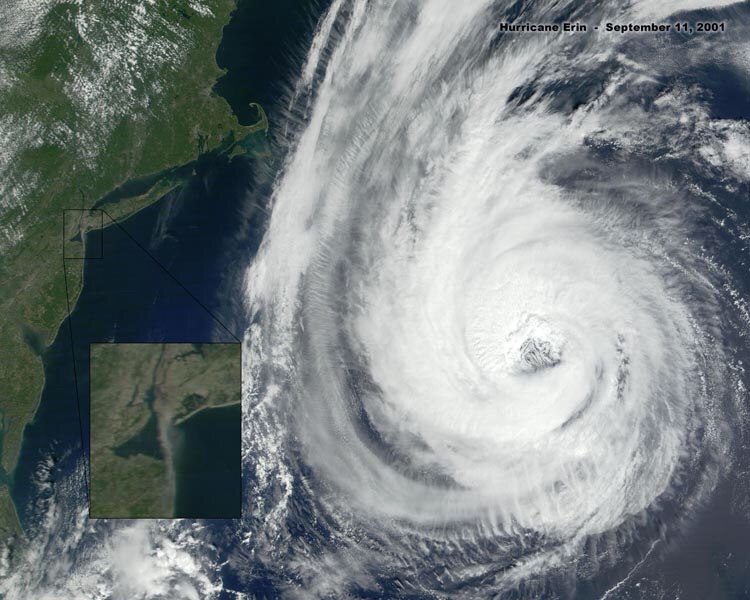
  2. If I say to you “your views on the matter of religious belief should not be kept silent, you can fall on one of many sides, none of which impact your being. You can simply avoid the issue, saying “it is not knowable.” You can decide to become an agnostic, and there are no ramifications. But if I say that there is evidence of a large and unreported hurricane off the shore of Long Island on 9/11, indicating control of weather, preplanning and pre-knowledge of the event among a wide array of government and private power centers, you cannot thereafter avoid knowledge of the hurricane. It was there. It is proven. You are no longer free to be ignorant by someone else’s fault. It’s on you.
  3. You are now placed in a position where you have to make a decision. It is, in regards to your own self esteem, momentous. Knowing of the hurricane and its implications, you can choose to ignore it and continue to believe the official story of events of that day. That is moral cowardice. Or, you can face the reality, and begin to deal with the implications. That is entirely a personal journey, and I have no advice. It’s not for namby-pambies.

It is hard work. people will criticize you, ostracize you, but they will not, because they can not, argue the facts. In choosing that route you will always have this: Honor, and dignity. You chose the hardest path, and we’re not swayed by the opinion of others or lack of faith in your own abilities.

You’ll be a person of character and strength, and one possessed of the trait called moral courage. As Mark Twain reminded us, physical courage is common, but the moral variety a rarity.