Category: Fear mongering
The Horse is Dead
The 1960s were a breeding ground for psychological operations—whether it was the Cuban Missile Crisis, the assassinations of JFK, RFK, and MLK, the Manson family saga, or the Kent State massacre. These events shaped a generation, but it wasn’t until the 1990s that the architects of mass perception found their perfect formula.
Initially, I set out to catalog the most infamous psyops of the 1990s, highlighting their patterns and implications. But in the end, I’ve succumbed to the sheer futility of it all. As one astute commenter noted, perhaps the better course is to forget—to untangle oneself from these constructed narratives and move forward.
Still, for the sake of posterity, here are some of the most notable psychological operations of the 1990s, ranked in no particular order:
- The Simpson Trials (1995) – A media circus that turned a double homicide into the ultimate courtroom spectacle, setting the standard for sensationalist legal coverage.
- Lorena Bobbitt (1993) – A domestic abuse case twisted into tabloid gold, shifting public discourse on gender and violence in ways both grotesque and performative.
- Y2K (1999) – A manufactured panic that convinced millions the world might end at the stroke of midnight on January 1, 2000.
- The Gulf War (1990) – A conflict sold with precision-marketed propaganda, complete with staged testimonies and made-for-TV missile footage.
- Nancy Kerrigan/Tonya Harding (1994) – A bizarre, soap-opera-style scandal that turned figure skating into a battleground of class warfare and villainous narratives.
- The Waco Siege (1993) – A tragic standoff that played out like a scripted horror, setting the stage for future debates on government overreach.
- The Oklahoma City Bombing (1995) – A national tragedy that reinforced domestic terrorism as a dominant fear in the American consciousness.
- The Monica Lewinsky Scandal (1998) – A presidency consumed by sex, scandal, and the relentless 24-hour news cycle.
- The Columbine Massacre (1999) – A defining moment for media-fueled moral panic, spawning myths and policy shifts that still linger today.
- Long Island Lolita (1992) – A lurid crime that became a spectacle of tabloid excess, reducing real-life violence to daytime talk-show fodder.
- Olympic Park Bombing (1996) – A moment of terror at the Atlanta Olympics that ignited debates on security, civil liberties, and the dangers of trial-by-media.
Ultimately, my humble suggestion is this: expunge these events from your mind and experience. They were never meant to inform, only to distract. Even as I list them here, I recognize the irony. But perhaps acknowledging the game is the first step toward moving beyond it.
Now, back to real life.

90s Psyop #9: The Olympic Park Bombing
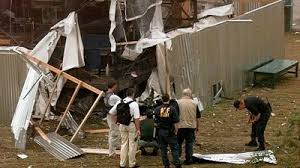
The 1996 Centennial Olympic Park bombing was supposed to be the work of a lone extremist Eric Robert Rudolph, a radical anti-government survivalist who, we are told, managed to pull off a terrorist attack in the middle of the Olympic Games using little more than a pipe bomb and backpack. But, as with so many stories of national tragedy, this one follows a very familiar script: an explosion, a rapid scapegoat, a media feeding frenzy, and government response that – coincidentally, of course – expands state control.
Insert different names and locations, and you could be talking about Oklahoma City, 9/11, the Boston Marathon Bombing, or any number of suspiciously convenient crises that just so happen to lead to increased surveillance, stricter security measures, and a general tightening of the noose around personal freedoms.
Continue reading “90s Psyop #9: The Olympic Park Bombing”Are Headlines in 2025 More Alarmist Than Ever?
Is it just me, or do the headlines in 2025 feel unusually alarmist…and bizarre? I don’t typically spend much time digging into the news, and I avoid watching it on television altogether because of its impact on my mental health. My exposure to mainstream media has mostly been limited to quick glances at MSN tabs featuring lighthearted stories like “5 Sandwiches to Order at Restaurants and 5 to Avoid” or “14 Worst Restaurant Chains We Thought Were the Best.”
However, the tone of the news this year seems to have escalated dramatically—and we’re only a week in. Here’s a snapshot of the concerning and chaotic headlines so far:
Continue reading “Are Headlines in 2025 More Alarmist Than Ever?”Notable Death Watch: James Corcoran
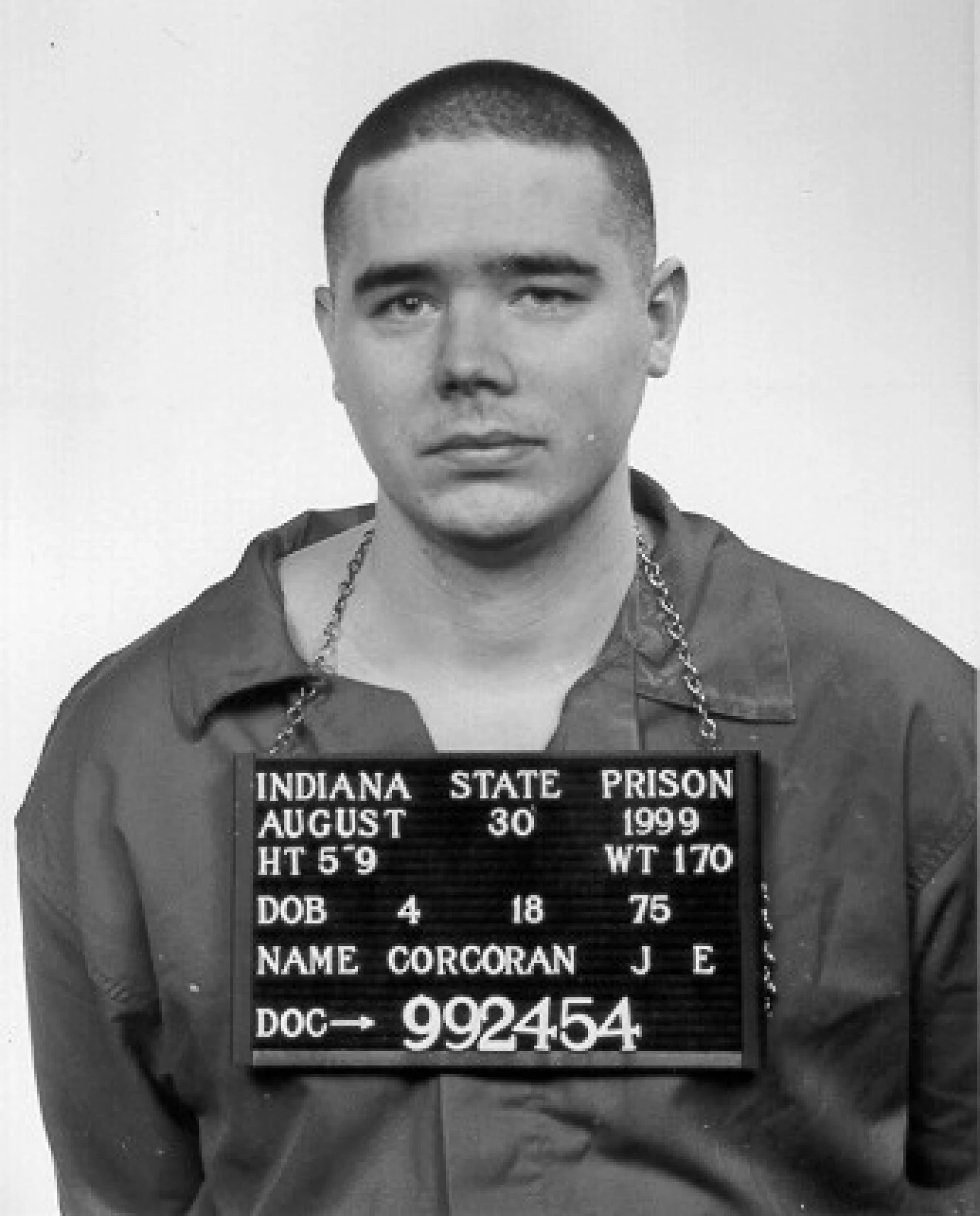
Joseph Edward Corcoran was an American convicted mass murderer executed on December 18, 2024, for a 1997 quadruple murder in Indiana. Corcoran’s story is a whirlwind of family dysfunction.
I’m starting to think I might have a built-in flaw when it comes to searching for photographs. In this media-saturated world we live in, you’d assume it’d be easy to find high-resolution, unaltered images of “notable” individuals. But nope—apparently not. Case in point:


What is it about Joseph’s body configuration that causes his clothing to fall/shift to his right side? I added up the number 992454 on his fake-ass looking placard…I’ll give you 33 guesses what it totals, but you’ll only need one.
Continue reading “Notable Death Watch: James Corcoran”Manipulative Melodies: Investigating Social Engineering in Music
I’ve been taking a stroll down memory lane with the top-selling albums of the 1970s, a sort of personal farewell tour. But don’t worry, this isn’t one of those “farewell” tours that music acts like The Who or Cher love to milk for decades. No, this is more like revisiting old haunts, savoring the bitter and the sweet, and offering a proper “so long” to the soundtrack of my youth. During the golden years of 1971 to 1980, I went from nine to eighteen—a stretch of time that perfectly bookended my high school era. Naturally, the music of this decade made a massive impression on me. But, like that friend who overstays their welcome, a lot of these songs have been played to death. My old kit bag will carry only a few carefully chosen relics as most of the overexposed hits are being gently but firmly shown the door.
Continue reading “Manipulative Melodies: Investigating Social Engineering in Music”My “notable death” Dossier (11/21/24)
Source-ery
Reggie Gibson, better known as the rapper Saafir, passed away on November 19. While no official cause of death has been released, it was reported that he had experienced ongoing health challenges since a severe back injury in 1992, sustained during his escape from the hard landing, crash, and subsequent fire of TWA Flight 843.
Details about Saafir’s early life and family are scarce. According to Wikipedia, he reportedly lived with Tupac Shakur during their youth. Given Tupac’s background as an effeminate ballet student at the time, some may speculate about the nature of their relationship, though this remains purely conjecture.
Continue reading “My “notable death” Dossier (11/21/24)”Scientocracy
I am going to delete some words to shorten this passage, taken from the essays Death: The Unintended Consequences of the War on Opioids, by Jeffrey A. Singer, and Drugs: The Systematic Prohibition of U.S. Drug Science, by Trevor Burrus, printed in the book Scienttocracy (page 125 et seq), edited by Patrick J. Michaels and Terrence Kealey. Stanley is a research fellow at the Cato Institute. He received his from Brooklyn College (CUNY) and his MD from New York Medical College. Burrus is also a research fellow, working in the Cato Institute’s Robert A. Levy Center for Constitutional Studies. He holds a BA in philosophy from the University of Colorado at Boulder and a JD from the University of Denver Sturm College of Law. All that follows until you run into the word “OK” is from Stanley and Burrus, thereafter from me.
Riding the 33: Doom and Bloom
“I love dandelions. They make me feel like sunshine itself, and you will always see some creature resting on an open bloom, if you have a little patience to wait. This vital source for all emerging pollinators is a blast of uplifting yellow to brighten even the greyest of days. It stands tall and proud, unlike all the others opening and swaying in the breeze. The odd one out.”
~ Dara McAnulty, Diary of a Young Naturalist
This past weekend was the convergence of holidays spanning three Abrahamic religions — Christianity, Judaism, and Islam. It seems this occurs . . . every 33 years. (Uh oh, there is the 33 — once again.) April 15, 2022 was Good Friday, and also the first day of Passover, concordantly marking the time of Ramadan.
Amidst this concurrence of religious faiths, there have been seeds of doom and gloom wafting over the media airwaves. One alleged incident of doom this week occurred in the NYC subway. And what do you know? It was infused with the cryptic 33 (see here and here). Imagine that. Do you also see the 33 coding in this reported incident of gloom on April 16, 2022 at Columbiana Centre in Columbia, S.C.?
If the conniving, 33-obsessed controllers can ride the 33 this week (ostensibly, a time signaling religious faith and renewal), then, hey, why can’t we?! Perhaps there is an occulted hint in exploiting the vibrational template of 33, but for beneficent aims (?). While I surmise that occulted numbers — such as the 33 — can be utilized to manifest imprints of doom and gloom, I suggest that ordinary, well-intentioned individuals (including an ‘odd one out’ — such as myself) may also be able to access the natural vibration (an inherent, universal energetic template) of the 33, with which to harness and manifest intentions of bloom, as well as reckoning, restitution, and reciprocity.
Continue reading “Riding the 33: Doom and Bloom”Monday minutia
Marc Maron is a comic, former alcoholic and cocaine addict, by his own admission. His comic routine is narrative and kind of free-floating. He might have a general idea of where he is going in any set, and a few punchlines in mind, but I doubt even he knows for sure exactly where he is taking us. His career has been a struggle to get to the middle. He was once known as the angry comic, and the image to the left fit him very well. I generally like him and do not change channels when driving if he comes on. But he is known to toe the line, ridiculing people who don’t see any Climate Change going on, and also any who refused to vaccinate and wear a mask. He can be doctrinaire, arrogant, and blind.
Long before so many others, like Conan O’Brien and Dana Carvey, Sarah Silverman and David Spade started doing podcasts (a result of the Scamdemic), Maron settled into the format. He is a good interviewer, and he does his homework. I was shocked to learn that he has done 1,315 episodes. He has hosted some of the biggest names in show business. I wondered what it was that made Ted Danson get up at 3AM on a Saturday to travel across Los Angeles to sit down for an interview in Maron’s garage. He has some kind of magnetic attraction to draw big names like that.

Petra wrote a post in the aftermath of Bondi Beach, obviously knowing the event was fake, but also wondering about the phrase “Shelter in place.” I first saw that phrase in 2020, after the Colorado state government ended the lockdown after 30 days. I did not wonder about it then, but since I had not locked down and had no clue how to shelter myself from something that cannot be seen, tasted, smelled or felt, I ignored that too. Below is a wordy (moi?) comment I left for Petra, our friend and co-conspirator.
Continue reading “On sheltering in place out of fear of what will happen for not believing in [the] virus[es]” →